

Turning Data Into Direction
Most companies do not have a data shortage. They have a clarity problem.
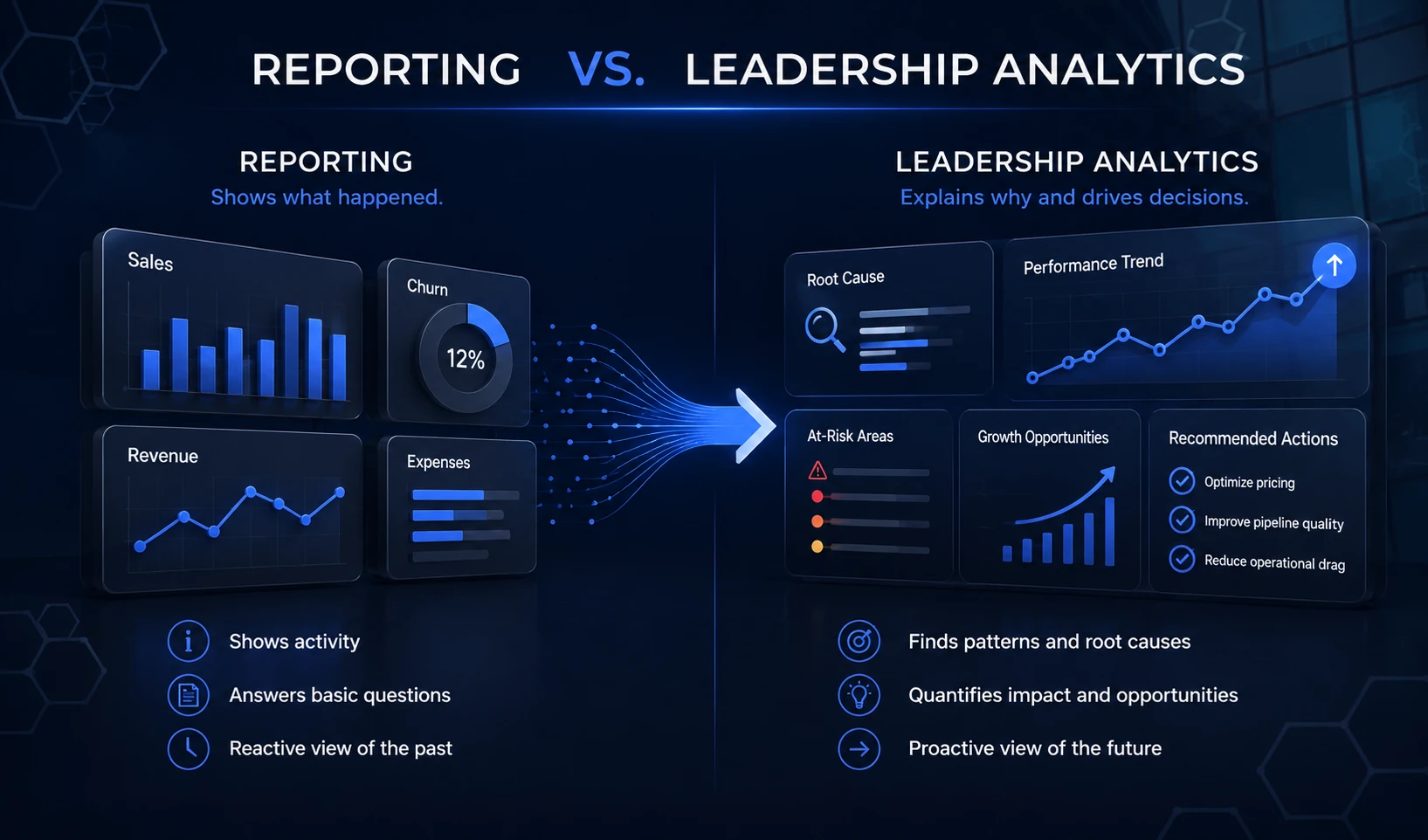
Dashboards can show declining sales, rising costs, or weaker margins, but they rarely explain why those changes are happening. Leadership analytics connects the numbers to operational reality so businesses can make better decisions earlier.
At WG Consulting, we often see companies overloaded with reports while still lacking clear direction. The goal is not more data. It is better judgment.
Reporting vs. Leadership Analytics
What Dashboards Do Well
Traditional dashboards are useful for tracking:
- Revenue
- Customer churn
- Cash flow
- Project status
- Campaign performance
They provide visibility, but not always understanding.
Where Dashboards Fall Short
A dashboard may show margins shrinking without identifying the actual cause:
- Labor inefficiencies
- Weak forecasting
- Discounting
- Vendor cost increases
- Operational delays
Leadership analytics focuses on identifying what is changing, why it matters, and what action should follow.
A More Strategic View
Leadership analytics helps executives:
- Spot operational pressure early
- Identify profitability leaks
- Improve forecasting
- Align departments
- Make faster decisions
The conversation shifts from “What happened?” to “What should we do next?”
Why Leaders Rely on Analytics
Faster Decision-Making
Executives rarely have perfect information. Analytics improves visibility into:
- Cash flow
- Staffing pressure
- Customer retention
- Delivery performance
- Margin trends
Better visibility leads to faster, more confident decisions.
Better Team Alignment
Sales, finance, operations, and marketing often measure success differently. Shared analytics creates a common performance language and helps teams evaluate tradeoffs more effectively.
Earlier Risk Detection
Operational problems usually appear gradually through:
- Slower collections
- Rising churn
- Delivery delays
- Margin pressure
Leadership analytics helps businesses recognize those warning signs before they become larger financial issues.
Metrics That Matter Most
Financial Metrics
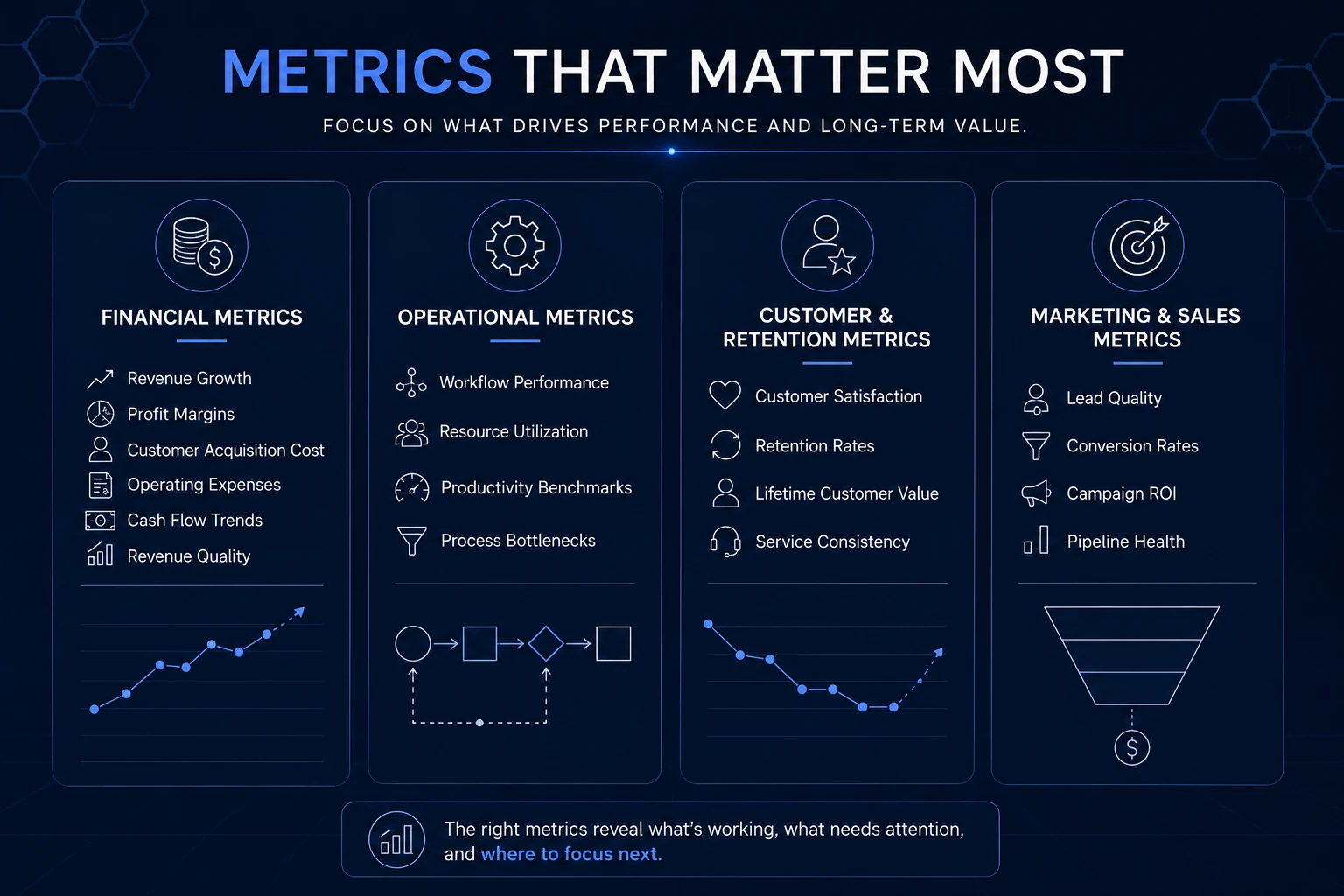
Leadership teams should closely monitor:
- Profit margins
- Operating expenses
- Cash flow
- Revenue quality
- Customer acquisition cost
Operational Metrics
Operational reporting should focus on:
- Workflow efficiency
- Resource utilization
- Productivity benchmarks
- Process bottlenecks
Customer & Sales Metrics
Important growth indicators include:
- Retention rates
- Customer satisfaction
- Lead quality
- Conversion rates
- Campaign ROI
Strong analytics helps businesses focus on profitable growth, not just activity.
How Analytics Supports Strategy
Better Forecasting
Predictive analytics helps leadership plan more effectively for:
- Revenue growth
- Staffing needs
- Capacity planning
- Cash flow management
While forecasting is never perfect, it helps businesses become less reactive.
Smarter Budget Allocation
Analytics helps leaders identify which investments are producing measurable results and which initiatives need adjustment.
Aligning Reporting With Business Goals
Reporting should directly support company priorities. Whether the goal is growth, margin improvement, or retention, analytics should help leadership measure progress clearly.
Common Analytics Mistakes
Focusing on Vanity Metrics
Traffic and lead volume can look impressive without improving profitability. Leadership should prioritize metrics tied to margin, efficiency, retention, and customer value.
Collecting Too Much Data
More reporting does not automatically improve decision-making. Every metric should support a meaningful business question.
Ignoring Context
Numbers without operational context can lead to poor decisions. Seasonality, staffing changes, and market conditions all affect interpretation.
Treating Analytics as Only an IT Function
Technology teams manage systems, but leadership must define the priorities, questions, and decisions connected to the data.
The Future of Leadership Analytics
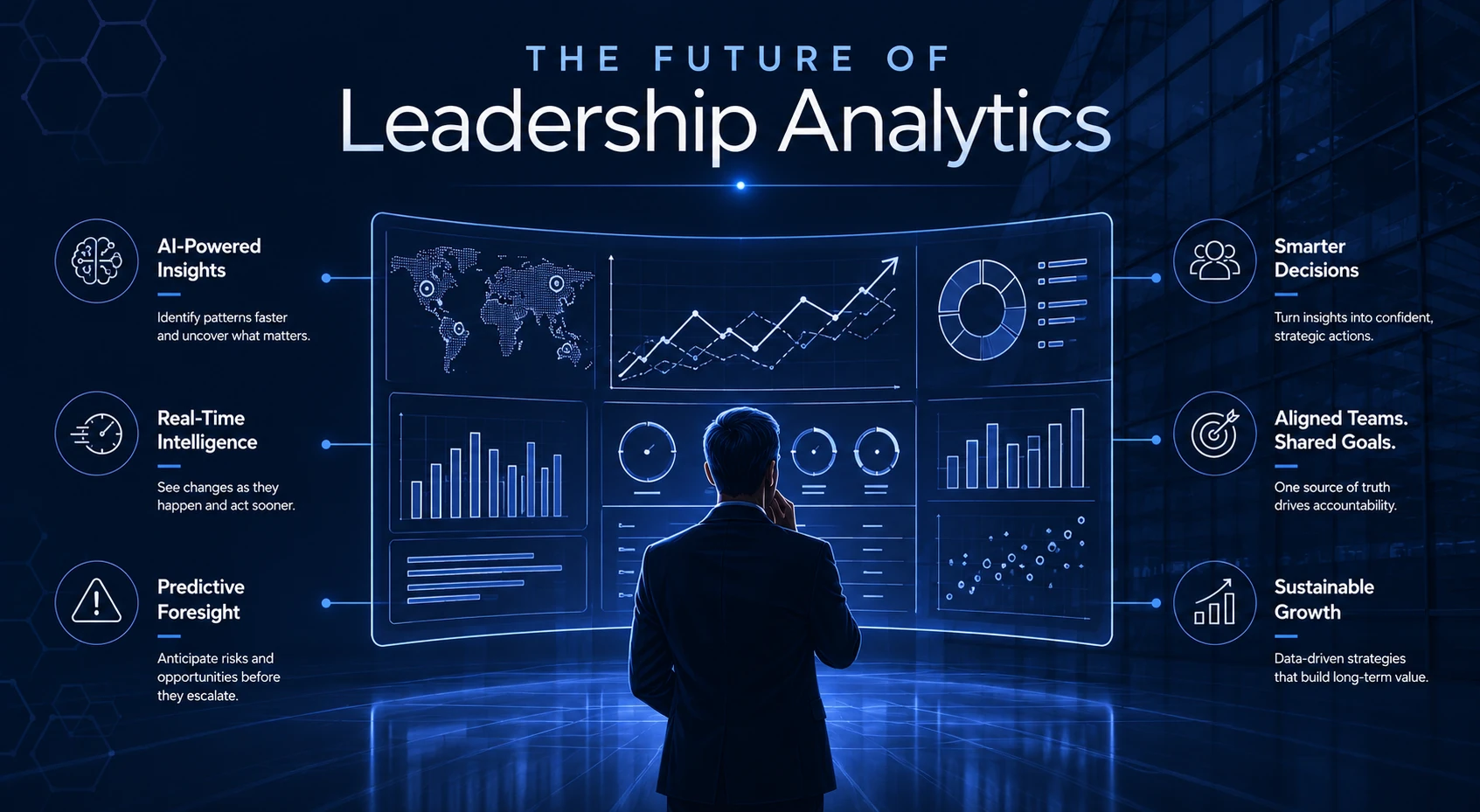
AI and real-time reporting are improving:
- Forecasting
- Pattern recognition
- Operational visibility
- Risk detection
But analytics still requires leadership judgment. Technology can identify patterns faster, but executives decide which insights matter and how the business should respond.
Companies that benefit most from analytics are not tracking everything. They are tracking what directly improves decisions, operational performance, and long-term growth.